skip to main |
skip to sidebar
From here.
-
ORTHODOX CATECHISM TOPICS
By: Fr. Anthony Alevizopoulos
PhD. of Theology, PhD. of Philosophy
The entire world is God's creation and therefore it is by nature good; evil does not have an ontological existence. Natural evil is the result of discord which was created after man's fall; even death is a means of educating man in order to lead him back to communion with God. Moral evil, sin, does not have its cause in man's nature, but in man's disposition.
Through man's fall, all of nature was dragged into servitude to corruption. God, however, in the person of His Incarnate Word or Logos entered into the reality of the world and renewed it. By His death, Resurrection and Ascension, He led man, whom He had assumed, to the life of incorruption and immortality; and He exalted him to the height of the glory of God the Father.
This glory, which during the second coming of our Lord shall become our possession, is prefigured in the life of the Church, and especially in the life of the saints. The bodies of the saints, the sacred relics, are surrounded by the sanctifying grace of God and become a source of divine blessings and miracles (IV Kings 13,21. Wisdom of Sirach 18,14). The grace, honor and glory which God grants to the relics of the saints consti-tute a foretaste and predepiction of man's transfiguration and that of all creation. This same grace surrounds the saints even during this life and can be discerned in some as warmth, in others as light, or through various miracu-lous energies, which are blessings for man. Even material objects in the life of the Church bear God's grace.
The presence of God's grace and glory in man and in material creation prefigures the liberation of all of creation from servitude to corruption and guarantees the certainty of our hope in life and incorruption. The world's sanctification was also wrought in the Jordan River during our Lord's Baptism. The hymns of our Church on the day of Epiphany and the prayers of the Great Sanctification of the Waters reveal the new reality of the world: "Today the earth and the sea share in the world's joy and the world is filled with gladness", states the prayer of St. Sophronios of Jerusalem.
Christ hallowed the waters of the Jordan, the banks of the river and all of creation: " You, Lord, being baptized in the Jordan did sanctify its waters"; "having hallowed the waters of the Jordan You did crush the power of sin"; " Today creation is enlightened; today all things rejoice, the heavenly together with the earthly", states the hymnology of our Church.
Through the participation of the material creation in the divine worship of the Church and in the praise and doxology of God the hope of incorruption is expressed. In the Divine Liturgy all of creation is taken on and becomes a new creation in Christ. It is the bread and wine that becomes the Body and Blood of Christ, the candles, the icons, the Holy Cross; and all the material objects participate in some way in the Divine Liturgy. The water, the oil, the incense, the palms, the flowers, and even the new harvest of the crops of the earth are blessed, and the whole world regains that which it lost through man's fall: internal unity, the correct relation-ship with God, which is an eucharistic relationship, a relationship of offering in which all things are referred up and offered to God, Who becomes once again the center of the world.
The unity of the entire creation which offers up "with one mouth" doxology to the Triune God is expressed at the end of the prayer for the Great Blessing of the Waters: "...that with the elements, and men, and Angels and with all things visible and invisible they may magnify Thy most holy Name, together with the Father, and the Holy Spirit, now and ever and unto ages of ages. Amen." Man thus forsakes his autonomy and his egoistic use of God's creation; he once again finds his correct place in the world and his "royal" and "priestly" minis-try (Gen. 1, 28. 2, 15).
The Christian does not reject this world, nor does he consider it to be something negative. He is not called to abandon the world, but to serve or liturgize in it. Christ wants his faithful to be in the world; to be "the salt of the earth" and "the light of the world" (Matth. 5, 13-14). If our world is "tasteless and unsalted" and in darkness, if it follows a process of disintegration, then this means that Christians do not serve "as the salt of the earth" and the "light of the world". We must not then look for the cause of the world's misfortune in others.
This place that the Christians hold in the world implies responsibility for the preservation and the sanctification of God's creation, a task which stems from the service which God entrusted to man in Paradise ("...to cultivate and preserve", Gen. 2, 15). A Christian cannot be indifferent to the world's problems; he must labor to bring the world once again back to its doxological relationship with God. This means that the use of the world cannot have as its center the satisfaction of man's ego and the "needs" which man constantly creates.
The true believer does not attribute absolute and exclusive value to the needs of this life nor to man's abilities. He does not intervene in God's creation in an autonomous way, independent of God's will, and egocentrically; he feels that he is responsible for cre-ation. He does not seek knowledge and use of God's creation "unconditionally". The faithful does not use the powers of the world in a manner not blessed by God and contrary to the balance and harmony in creation and to the unity of God's world.
The Orthodox believer knows that man after the fall ceased to offer creation up to God as a doxology, i.e. to practice his priestly duties vis-a-vis creation; it was he who led creation into servitude to corruption. Within the Church however, he acquires the experience of freedom from this servitude. With this experience he is now called to return to the world with the assurance of the transfiguration and salvation of the entire creation. Having once again acquired within the liturgical place his correct relationship with creation and his correct place within it, he is called to practice his service as priest of the world.
This transfiguration of man and creation in the Church is still not yet the "new heavens" and the "new earth". These will become a reality during Christ's Second Coming. Thus it is that the Christian hope is "not of this world". Every chiliastic-messianic concept which looks to an establishment of an earthly kingdom and the creation of Paradise on earth, is foreign to the spirit of Christ.
Christians respect the authorities of the world and submit themselves to human laws which do not go against their Christian hope (Rom. 13, 1-8. Acts 3, 30). They do not preach a "gospel" conforming to the aspirations and the aims of this world. This is the saving message of the Church to a world which has an exclusively inter secular character and can discern no other vertical dimension in its life. It is for this reason that Orthodox Monasticism with its ascetical character and heavenly orientation offers to our society a great service. It shows to contemporary man, who is exclusively orientated towards the horizontal dimension, the vertical dimension which is at the center of monastic life.
The monks thus constitute the indicators of the reality of heaven, which man who lives in the world cannot easily grasp. Monasticism opens the way to the absolute experience of life in Christ: a way of asceticism and obedience which is followed throughout one's life without ending; a way which is at the same time danger-ous for those who fail to remain humble and steadfast in love that "seeks not its own". This life of the monastics constitutes a continuous vocation to contemporary man's disposition and an excellent prefiguration of the future life.
This anticipation of a new life creates in the Chris-tians the conviction that here on earth they are strangers and sojourners, and that in traversing this life they walk towards their true homeland (Hebrews 11, 13-16). The believer has his eyes always fixed upon heaven and considers death to be the last stop in his journey, his "passing on" or birth into the next life.
We believe that after their separation from the body the souls of the righteous are in the hands of God (Wisdom of Solomon, 3,1) and they await the resurrec-tion of the bodies, so that they may "totally" become partakers in God's love and glory. On the contrary, the souls of the unrighteous who in their lives rejected God's love and communion with Him and with the brethren, and who had as the only center of reference their "ego", are deprived of this love, for their egoism does not allow them to accept it.
Christ's Second Coming will signal the general resurrection; our bodies will be clothed with incorruption and immortality. The righteous shall be raised unto life, the unrighteous unto condemnation. This will be the general judgment of the world; God's love will judge man in accordance with the position he assumes towards it, i.e. whether he accepts it or rejects it.
The Lord desires the salvation of all men, and their return to their true homeland: to the love and commu-nion with the Triune God. This we call Paradise. By this word we do not mean a material but a spiritual reality. Holy Scripture compares this communion to the relation-ship between the Bridegroom and the Bride, and their union is compared to marriage (Rev. 19,7).
The sons of the Kingdom shall be eternally united with Christ and shall henceforth absolutely live the condition of being "one in Christ"; then shall we be in Him participators by grace of His unity with the Father ("I in my Father and you in me" Jn 14,20). All who live in this life closed up within themselves, all those who do not rejoice in seeing the face of their brother shall be deprived of this joy. They of their own accord have chosen their eternal torment.
Christ's Second Coming is for the faithful the fulfillment of their hope, just as is the arrival of the Bridegroom for the Bride. This is why the preparation for the reception of the coming Christ constitutes the chief concern of this life.
But when shall the Lord come? Christians do not concern themselves in pinpointing a specific date. They are vigilant and take care to be ready at every moment, for the Lord shall come suddenly, when we do not expect Him (Matth. 24, 13. 33. Acts 1, 7). The Lord Himself warns us to protect ourselves from false prophets who will be workers of guile and treachery. Outwardly they shall appear in the guise of Christ or in the form of an angel (Matth. 24, 4-5. 23-27. II Cor. 11, 13-15). Their teaching shall not be identical with that of Christ; thus the knowledge of the only real truth of Christ is necessary in order to avoid error and deceit.
Tags: catholic social teachings on social justice continuing continuing hide journey journey seek white magic spells meet fizban my green ancient ancient israel israel library religion national organization on women
Kevin DeYoungJune 19, 2012The Gospel Coalition
At the end of 1 Corinthians 2:13 Paul uses a popular word: spiritual. It's a popular word for us, and it was a popular word in Paul's day. They desired spirituality just as much. They loved spiritual gurus, and so do we. But not everything spiritual is truly spiritual.
When you hear the word "spiritual" certain images come to mind. You think of someone very quiet and contemplative. Or maybe you picture someone with hands raised in a demonstrative expression of worship. You may think of your spontaneous, free-wheeling, "Spirit-led" friend. The spiritual person in your mind may be the young woman deeply interested in miracles and mystery, or maybe the old man earnestly pursuing a relationship with a higher power. To be "spiritual" in our day is to be vaguely interested in the supernatural and loosely committed to practices like prayer and meditation.
And yet, all of these indicators are what Jonathan Edwards would call non-signs. They don't prove anything one way or another. It's not bad to be contemplative or demonstrative or spontaneous. There's nothing wrong with being interested in prayer, miracles, or a higher power. These interests and practices could be good or bad, depending on other factors. But by themselves, these things are not spiritual, not according to Paul's definition.
The spiritual person understands spiritual truths (1 Cor. 2:13). He receives what the Spirit imparts. By contrast, the natural person (the unspiritual person) does not accept the things of the Spirit of God, for they are folly to him (v. 14). Paul is clearly distinguishing between two categories of people. On one side you have spiritual people who accept spiritual things. Opposite them you have unspiritual people who do not accept spiritual things. What makes a person spiritual, then, is the embrace of spiritual things.
And what are the spiritual things Paul has in mind?
We must let scriptural context, and not our immediate culture, answer that question. Paul has just finished explaining that the message of the cross is folly to those who are perishing (1:18). His preaching does not look like wisdom to the wise ones in the world. Nevertheless, he continues to know nothing among the Corinthians except Christ and him crucified (2:2). Paul knows that what Jews and Greeks want to condemn is the power of God unto salvation (Rom. 1:16). But you have to have ears to hear it. This message, considered foolish by many, is wisdom among the mature (1 Cor. 2:6). Though the rulers of this age did not understand it and therefore crucified the Lord of glory, the message of the cross is actually the revealed wisdom of God, once hidden from view and decreed before the ages began (2:7). The "spiritual things" refers to the gospel proclamation revealed by the Spirit and entrusted to Paul and his apostolic band.
The spiritual person, therefore, is the one who accepts the message of the cross. We are truly spiritual if, and only if, the Spirit of Christ has given us the mind of Christ to receive the good news concerning the death and resurrection of Christ. No matter how much you like angels, or how much you pray, or how often you mediate, or how much you are into yoga, or how much you believe in miracles, if you do not understand, cherish, and embrace the cross you are not a spiritual person. The spiritual person discerns spiritual things, starting with the substitutionary sacrifice of Christ on the cross for sinners like you and me. To accept this gospel, with all its doctrinal and religious contours, is the beginning of true spirituality. For in the end, our slogans and endless searching do not count for much, neither does our interest in reading "Chicken Soup for the Soul". If we reject the message of the cross, we have rejected the Spirit's revelatory work. And when we spurn the Spirit we forfeit the right to be considered spiritual.
Tags: purpose of the tribulation removing black magic artemis greek goddess mythology picture top making plans start making sense don't you believe any word between optimism and pessimism march 31 2013
COMMEMORATED ON JANUARY 13
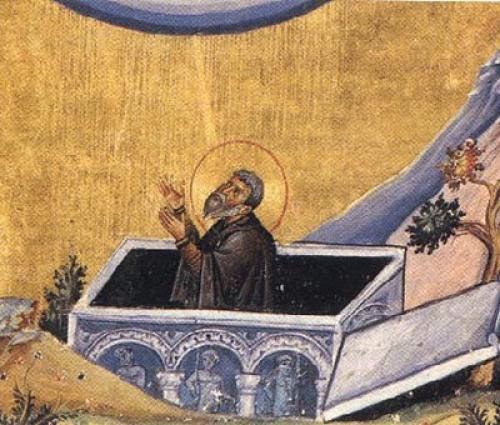
Saint James, Bishop of Nisibis, was the son of prince Gefal (Armenia) and received a fine upbringing. From the time of his youth he loved solitude, and for a long time he lived in the mountains around about the city of Niziba (on the border of the Persian and Roman Empires), where he carried out strict ascetic exploits: he lived under the open sky, fed himself with tree fruits and greens, and dressed himself in goat-skins. The monk passed all this time in prayerful conversations with God.
During a persecution by the emperor Maximian (284-305)he was glorified by a courageous confession of faith. Because of his strict and pious life the inhabitants of Nisibis chose him as their bishop (no later than the year 314). St James was glorified by his ardent zeal for the Orthodox Faith, by great miracles and by the gift of clairvoyance. By his prayers Nisibis was saved from an invasion by Sapor, the emperor of Persia.
St James, among the Fathers of the First Ecumenical Council, was one of the prominent defenders of the Orthodox Faith. A wise and educated pastor, he constructed a public school at Nisibis, in which he himself was an instructor. He made a strong impression on the hearts of his listeners by the high morality of his life.
St Gregory, bishop of great Armenia, turned to him with a request to write about the faith, and the Nisibis pastor sent to him by way of reply a detailed Discourse (18 Chapters): about the faith, about love, fasting, prayer, spiritual warfare, the resurrection of the dead, the duties of pastors, about circumcision against the Jews, about the choice of foods, about Christ as the Son of God, and so on. His composition distinguishes itself by its persuasive clear exposition and warmth.
St James died peacefully in about the year 350.
SOURCE:: http://pagan-wiccan.blogspot.com
Happy World Book Night everyone!
Yes, I am a giver again this year. On Thursday I went to my local library to pick up my box of 24 This year I am giving away I Capture The Castle by Dodie Smith, one of my all time favourite I Capture The Castle was written in the 1940's by Dodie Smith, who was a famous UK playwright living in America at the time and later went on to write her most famous book, One Hundred And One Dalmatians. While writing this book, Dodie longed to return to England and wrote this book in remembrance of happier times before the war had begun.
"When I think of this book, I often think of Elizabeth von Armin's book, The Enchanted April". Both are truly magical and show how a little love can change your perception and attitude towards life. This was probably the first book I read that would be considered YA, so it seems Dodie Smith was very much ahead of her time.
Similar to last year, I will be spending the day handing out these
Credit: http://animals-and-shamanism.blogspot.com
Sutton Hoo, the site of a pagan ship burial, is where one of Britain's greatest treasure hoards was discovered, by archaeologists in 1939. The British Museum lists the Sutton Hoo ship burial as one of the top ten British treasures.
It is thought to have been the tomb of Saxon King Raedwald who ruled East Anglia in the 7th century. He died in AD625, at a time when Christians and pagans lived side by side in England, but he chose to be buried in the style of his ancestors, honouring the pagan gods of the land. He was one of the last pagan kings in England, although his rule ended before Penda of Mercia, the last pagan Anglo-Saxon king, who died in 655, and the last pagan Jutish king, Arwald of the Isle of Wight, who was killed in 686.
King Raedwald's body was laid out in a ship surrounded by fabulous goods reflecting his status, wealth and power. The most impressive item is the famous helmet, which is now in the British Museum, although the wonderful replica (pictured right) is on show in the exhibition hall at Sutton Hoo.
I recently visited Sutton Hoo for the first time, and I was really impressed. Before I went, friends had told me all I would see were a few mounds, because the treasure had all been removed to London, where you can see it in the British Museum. Well, even if that was true, Sutton Hoo was still worth a visit because it is a glorious site that looks absolutely lovely on a summer's day - as you can see from the pictures top and bottom. There are lovely country walks around the burial mounds and through the surrounding woods, with fields nearby and the river in the distance.
Sutton Hoo is managed by the National Trust, which puts on guided tours and events throughout the year including lectures, Anglo-Saxon living history demonstrations, rambles and feasts. Every summer a few original items are returned to the site, placed safely in a treasury room.
If you fancy taking part in a special Summer Solstice Celebration at Sutton Hoo, on Sunday 20 June, Dr Sam Newton will be giving a presentation followed by supper and a sunset tour of the burial mounds. Should be a lovely way to celebrate midsummer. It runs from 7pm - 10pm. The cost is lb28 and prebooking is essential. Email suttonhoo@nationaltrust.org.uk or call 01394 389700.
Sutton Hoo is at Woodbridge, Suffolk, IP12 3DJ.
For more details of the site and events taking place, visit
Tags: high llewellyns magick magick planetary serie the i am discourse goddess indrani goddess huitac black magic satan beginning a new year
Allah swt says in Quran;
"Invite (all) to the Way of your Rabb with wisdom and beautiful preaching; and argue with them in ways that are best and most gracious: for your Rabb knows best, who have strayed from His Path, and who receive guidance." (16:125)
So the best and most successful way to invite others towards Islam is the way of wisdom and decency. It is every muslim's duty to spread the word of islam to others in every possible way. Unfortunately, dawah is left to the scholars of islam. But this is not true. Each one of us needs to understand that being a muslim means part of a huge revolution. Just being largest religion in the world is not the success of islam. Islam's success is hidden in its followers. The better the followers are, the more true the message will be. When we open Quran, we find that the invitation of islam is not just for prophets or for the pious scholars. In fact, the propagation of deen is in the hands of all of us.
The method of dawah is not tricky or complex. It does not involve any bribery and mind manipulation. In islam, dawah means to simply convey the massage of islam. No one is forced to accept islam but the choice is left to the listener as it is mentioned in Quran that there is no compulsion in deen.
The invitation of islam is a gradual process, it is not a one time job. How it should be done is mentioned in the following hadith;
Bukhari, Volume 9, Book 93, Number 469:
Narrated Ibn Abbas:
When the Prophet sent Muadh to Yemen, he said to him, "You are going to a nation from the people of the Scripture, so let the first thing to which you will invite them, be the Tauhid of Allah. If they learn that, tell them that Allah has enjoined on them, five prayers to be offered in one day and one night. And if they pray, tell them that Allah has enjoined on them Zakat of their properties and it is to be taken from the rich among them and given to the poor. And if they agree to that, then take from them Zakat but avoid the best property of the people." This hadith indicates that everything should not be bombarded on others but dawah process needs to be step wise and gradual. Our beloved prophet Muhammad pbuh was the greatest example for all of us to follow. And the way he pbuh did the dawah was impressive to the extent that even non muslims and his bitterest enemies admired him for that. He pbuh never imposed islam on any one. His (pbuh) attitude and his qualities of character were enough to attract others towards islam. We all should be the same. Most of the times, all it takes is a simple action that makes one muslim.
Also, dawah should not be limited to non muslims only. There are many deviant sects exist among muslims now a days. They are also to be invited towards the real islam. But one thing should be kept in mind, a single harsh word can do the irrevocable mistake sometimes. It is also mentioned in the verse quoted at the start of the article. Allah swt says in Quran;
[041:033] Nobody's assertions could be better (and more trustworthy) than the words of a person who invites others towards (the worship of) Allah, acts righteously and says, "Indeed, I am among those who surrender and submit (to Allah)."
Tags: magic spells curses magic spells work carl jung dvd dressing fruit pickled salad sauce seasoning vegetable vegetable aleister crowley the beast purpose of tribulation
GUIDED TOUR OF LOUGH GUR
DATE & TIMES
19 AUGUST : 10:30 - 12:30
20 August : 10:30 - 12:30
ADDITIONAL DETAILS:
ADMISSION: Free
EVENT DESCRIPTION: Lough Gur is one of Ireland's archaeological and historical gems. The beautiful and enchanted lake lies 21 km south east of Limerick city. From the level surrounding countryside it unfolds in beauty its placid waters and rugged hills - a fairyland of stone circles, ancient habitation sites, megalith tombs, crannogs and castles.
EVENT ORGANISER/ORGANISATION: Lough Gur Development
VENUE: Lough Gur
Lough Gur, County Limerick
Limerick
ACCESS DETAILS
SUITABLE FOR CHILDREN: Yes
WHEELCHAIR ACCESS: Partial
CAR PARKING AVAILABLE: Yes
ANY OTHER DETAILS:
EVENT CATEGORY: Archaeology
Type:Outdoors
ORGANISER NAME: Kate Harrold
CONTACT ADDRESS: The Honey Fitz Theatre Patrickswell Lough Gur Bruff County Limerick
EMAIL: kate@loughgur.com
TELEPHONE: 061 385386
WEBSITE:
TELEPHONE: 0868337675
18 AUGUST : 11:00 - 17:00
ADDITIONAL DETAILS:There will be several events during the day, however, the main field event commences at 2pm
ADMISSION: Family 5 Euro to field, all other events free
EVENT DESCRIPTION: A range of family orientated activities to promote the town walls and medieval heritage of Kilmallock.
EVENT ORGANISER/ORGANISATION: Kilmallock Tourism Development Ltd/Walled Town Festival Committee
VENUE: Colaiste Iosaef TBC
Kilmallock Co. Limerick
Limerick
ACCESS DETAILS
SUITABLE FOR CHILDREN: Yes
WHEELCHAIR ACCESS: Partial
CAR PARKING AVAILABLE: Yes
ANY OTHER DETAILS: Fancy dress, re-enactment, weapons display, archery, crafts, treasure hunt, kiddies races, town walk.
EVENT CATEGORY: Walled Towns
Type:Indoors and Outdoors
ORGANISER NAME: Sarah McCutcheon
CONTACT ADDRESS: County Hall Dooradoyle Co. Limerick
EMAIL: smccutch@limerickcoco.ie
TELEPHONE: (087) 2941601
'THE MAGICAL MULKEAR: A FIELD TRIP OF DISCOVERY'
DATE & TIMES
24 AUGUST : 10:00 - 14:00
ADDITIONAL DETAILS:
ADMISSION: Free. Pre-booking is required.
EVENT DESCRIPTION: This event promises to be a very enjoyable day and will involve a bus excursion to visit a range of exciting sites throughout the Mulkear catchment.
EVENT ORGANISER/ORGANISATION: MulkearLIFE
VENUE: Mill Bar Car Park, Annacotty
Annacotty Weir Mill Bar Car Park Annacotty
Limerick
ACCESS DETAILS
SUITABLE FOR CHILDREN: Yes
WHEELCHAIR ACCESS: Partial
CAR PARKING AVAILABLE: Yes
ANY OTHER DETAILS: The field trip will focus on the rich biodiversity of the Mulkear catchment (from source to mouth) and some walking will take place to access sites.
EVENT CATEGORY: Inland Waterways, Rivers, Lakes & Wetlands
Type:Outdoors
ORGANISER NAME: Ruair'i 'O Conch'uir
CONTACT ADDRESS: MulkearLIFE - Inland Fisheries Ireland, Dock Rd, Limerick
EMAIL: info@mulkearlife.com
TELEPHONE: 061 300 238
WEBSITE:
SUITABLE FOR CHILDREN: Yes
WHEELCHAIR ACCESS: Partial
CAR PARKING AVAILABLE: No
ANY OTHER DETAILS: The field outing will examine a range of issues including local wildlife, in-stream biodiversity, the importance of riparian habitats (riverbank habitats) and local woodlands.
EVENT CATEGORY: Inland Waterways, Rivers, Lakes & Wetlands
Type:Outdoors
ORGANISER NAME: Ruair'i 'O Conch'uir
CONTACT ADDRESS: MulkearLIFE - Inland Fisheries Ireland
EMAIL: info@mulkearlife.com
TELEPHONE: 061 300 238
WEBSITE:
CAR PARKING AVAILABLE: Yes
ANY OTHER DETAILS:
EVENT CATEGORY: Traditional Skills
Type:Outdoors
ORGANISER NAME: Patrick Blackwell
CONTACT ADDRESS: Portnard Cappamore Co. Limerick
EMAIL: pj@mghayes.com
TELEPHONE: 061 334088
WEBSITE:
ANY OTHER DETAILS: This is an ideal setting to come and learn about local heritage in beautiful surroundings on banks of Blackwater River.
EVENT CATEGORY: Historic Buildings, Gardens & Parks
Type:Outdoors
ORGANISER NAME: Mary Flynn
CONTACT ADDRESS: Nano Nagle Centre Ballygriffin, Mallow, Co. Cork
EMAIL: secretary@nanonaglebirthplace.ie
TELEPHONE: 022 26411
WEBSITE:
ACCESS DETAILS
SUITABLE FOR CHILDREN: Yes
WHEELCHAIR ACCESS: Full
CAR PARKING AVAILABLE: Yes
ANY OTHER DETAILS:
EVENT CATEGORY: Forests & Woodlands
Type:Outdoors
ORGANISER NAME: Noreen O`Brien
CONTACT ADDRESS: Nano Nagle Centre, Ballygriffin, Kilavullen, Mallow, Co.Cork
EMAIL: noreen@nanonaglebirthplace.ie
TELEPHONE: 02226411
DONERAILE PARK GUIDED TOURS
To mark Cork Heritage week August 17th to 25th, a series of free guided tours of Doneraile Park are planned.
Visit Doneraile park and walk through 300 years of gardening history. Hear the history of the St. Ledgers and how they shaped the park that we enjoy today.Imagine how the walled garden once looked and discover rare trees.
All the tours are hosted by trained volunteers who are as enthusiastic about the park as you will be.
The park has 500 acres to roam in and discover from the deer park to the court and after all that walking why not enjoy the tea rooms situated in the court yard of the house.
For more details and to book a tour contact guides@doneraile.ie
Tags: black conflict in leaders religious unity correspondences in usa today er snapshot books of magic spells the dark side of halloween paganism basic books of magic spells